
Biodimension
Tissue Models

Skin that behaves like skin

Reconstructed human epidermis, full-thickness skin, vaginal epithelium, and disease-specific models — built from primary cells, validated against native histology.

How we build them

Multilayered, primary-cell tissue — at the air-liquid interface

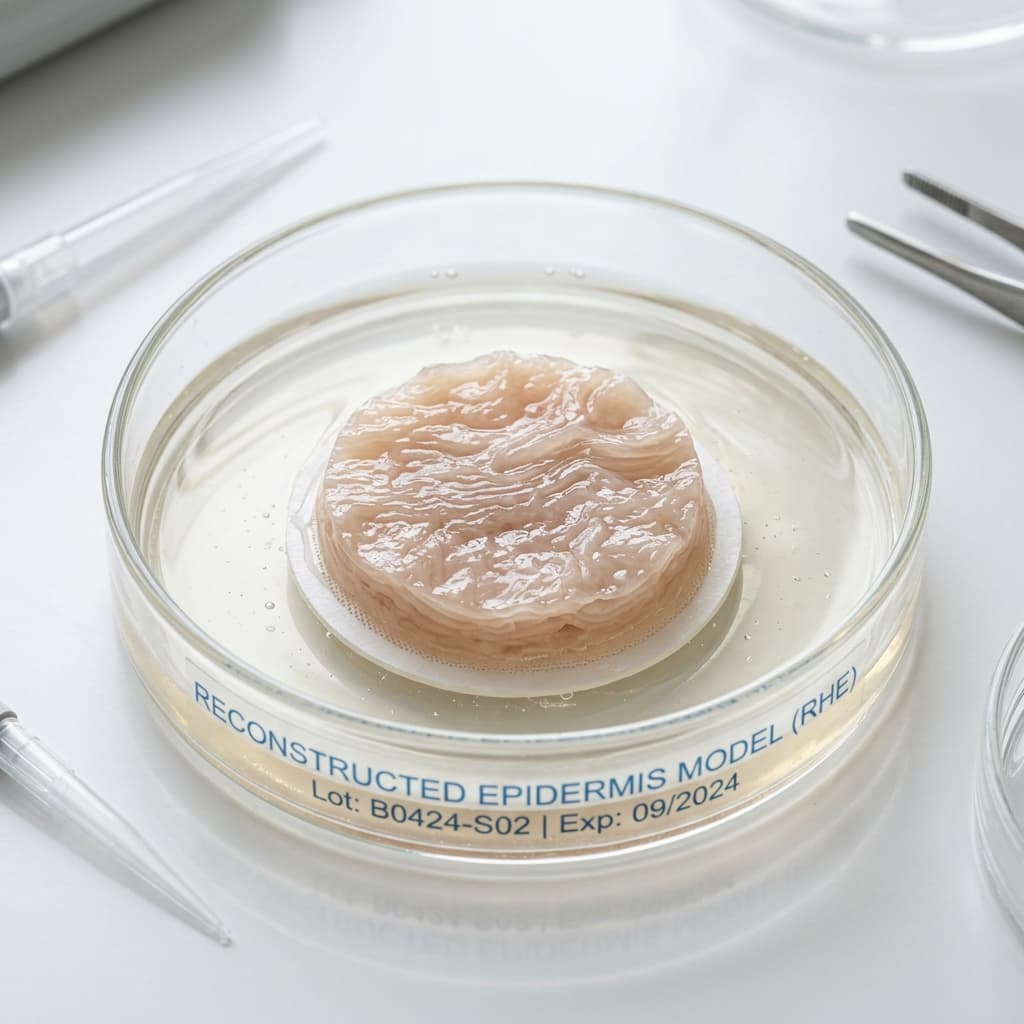
Our BioDEpi family is constructed using normal epidermal keratinocytes sourced from human tissues after obtaining ethical consent. Isolated and cultured in in-house developed serum-free media, these cells form multilayered, highly differentiated models that faithfully mimic the native human epidermis — including stratum basale (expressing p63 and Ki-67), stratum spinosum, stratum granulosum (involucrin, keratin 10), and a fully functional stratum corneum.

The resemblance of the BioDEpi model to the native human epidermis highlights its authenticity and suitability for various applications — from dermatological studies to drug development.
Tissue engineering process
The catalogue

Six tissue models, ready or under validation

From everyday irritation testing to disease-specific drug screening. Click any model for status, formats and applications.

Acne-Induced Skin model render

BioDAcne

Acne-Induced Skin

In market

BioDEpi infected with C. acnes — confirmed acneiform structures, TEER decline, disrupted stratum corneum and elevated TNF-α / acne gene expression.

  • Anti-acne formulation & ingredient screening
  • Oil & sebum reduction efficacy
  • Inflammatory response profiling
Full-Thickness Skin model render

BioDFT

Full-Thickness Skin

In market

Combined dermal + epidermal construct: a collagen matrix populated with viable fibroblasts beneath a stratified, keratinized epidermis. Highly predictive of barrier properties and sub-surface interactions.

  • Moisturization (HAS1-3, AQP3 via qRT-PCR)
  • Transdermal delivery (IVPT/IVRT)
  • Anti-wrinkle, skin tightening, wound healing
  • Phototoxicity & antioxidant testing
Formats: 24-well (0.3 cm²) · 12-well (1.1 cm²) · 6-well (4.5 cm²)
Lead time: 4–5 weeks
Human Skin Epidermis model render

BioDEpi

Human Skin Epidermis

In market

3D reconstructed epidermis from primary human keratinocytes. Recapitulates stratum corneum, basale, spinosum and granulosum. Verified free of HIV, hepatitis, mycoplasma and microbial contamination.

  • Deep epidermal penetration (UV/HPLC/ELISA)
  • Anti-aging & efficacy (AQP3, Ki67, collagen)
  • OECD TG 439 irritation & corrosion
  • Inflammatory profiling (NF-κB, IL-1, TNF)
Formats: 24-well (0.3 & 0.6 cm²) · 12-well (1.1 cm²) · 6-well (4.5 cm²)
Lead time: 21 days
Vaginal Epithelium model render

BioDVag

Vaginal Epithelium

In market

Multilayered, stratified squamous epithelium mimicking the human vaginal mucosal barrier, for femcare safety and efficacy work.

  • Femcare irritation, cytotoxicity, genotoxicity
  • Microbiome & infection (BV, candidiasis)
  • Intravaginal API permeation & retention
Lead time: 4–5 weeks
Psoriatic Skin model render

BioDPsor

Psoriatic Skin

Under validation

Reconstructed psoriatic skin for treatments targeting keratinocyte hyperproliferation and inflammatory markers.

  • Anti-psoriatic efficacy
  • Hyperproliferation & inflammation markers
Pigmented Epidermis model render

BioDPigma

Pigmented Epidermis

Keratinocytes + melanocytes localised in the basal layer, across three phototypes (II, IV, VI) for diverse skin tones.

  • Depigmentation & skin-brightening evaluation
  • UV exposure & melanin quantification
  • Photoprotection claims support
Lead time: 4–5 weeks

In the R&D pipeline

Tissue families we're actively developing — ask if a model on this list could anchor your study.

BioDDand — Dandruff epidermisAtopic Dermatitis modelBioDMel — MelanomaBioDCore — CornealBioDNasal — NasalBioDGinE — GingivalBioLung — Respiratory ALIBioLiver — LiverBioIntestine — IntestinalBioKidney — Urological
Clinical vs. reconstructed tissue

Faster, safer, more granular — without the volunteer queue

When a clinical study is overkill or off-limits, our reconstructed-tissue platforms deliver human-relevant evidence at a fraction of the cost and risk.

Data type
Clinical testing
Clinical data
Biodimension (reconstructed)
Human-relevant preclinical data
Cost
Clinical testing
Relatively expensive
Biodimension (reconstructed)
Relatively cost-effective
Ethical risk
Clinical testing
Risk to volunteers
Biodimension (reconstructed)
Zero animal / volunteer risk
Volunteer availability
Clinical testing
Prone to shortage
Biodimension (reconstructed)
Not required
Safety claims
Clinical testing
Post-study only
Biodimension (reconstructed)
Supported pre-market
Biomarker study
Clinical testing
Limited
Biodimension (reconstructed)
Specific biomarkers studied
Throughput
Clinical testing
Low
Biodimension (reconstructed)
High-throughput screening
Multi-product screening
Clinical testing
Difficult
Biodimension (reconstructed)
Parallel screening possible
Diversity
Clinical testing
Demographic limits
Biodimension (reconstructed)
Multi-race, multi-age possible

Need a model that isn't on the catalogue?

We build bespoke tissue platforms — from custom co-cultures to fully novel disease models. Tell us what you'd like to assay.