
Inside Biodimension: Building the Future of Non-Animal Drug Testing
Biodimension Founder Manokumar spoke with Indian Startup Times about why nine out of ten drugs fail in human trials, how reconstructed human tissue closes that gap, and what our recent Rs 8 crore funding round unlocks next.
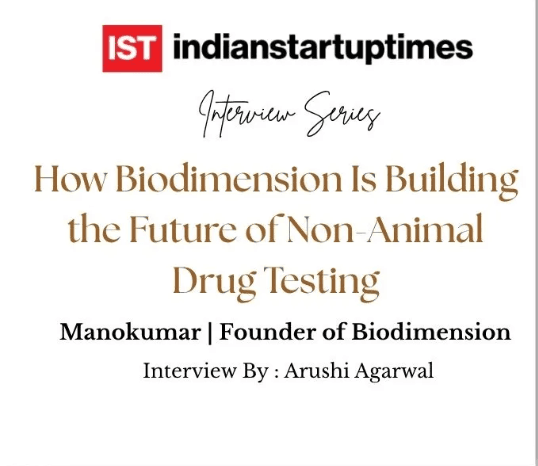
Our Founder, Manokumar, recently sat down with Indian Startup Times for a long-form interview on why Biodimension exists, how our tissue models work, and where we're headed next. Here are the highlights.
Read the full interview on Indian Startup Times.
Why we started
Roughly nine out of every ten drugs that enter human trials never reach the market, not because the science was careless, but because the systems used to test them, animal models and flat cell-culture dishes, don't represent human biology closely enough. Manokumar traces the idea for Biodimension back to watching the same drug behave completely differently across cancer patients, something no animal model or 2D dish could have predicted.
What we build
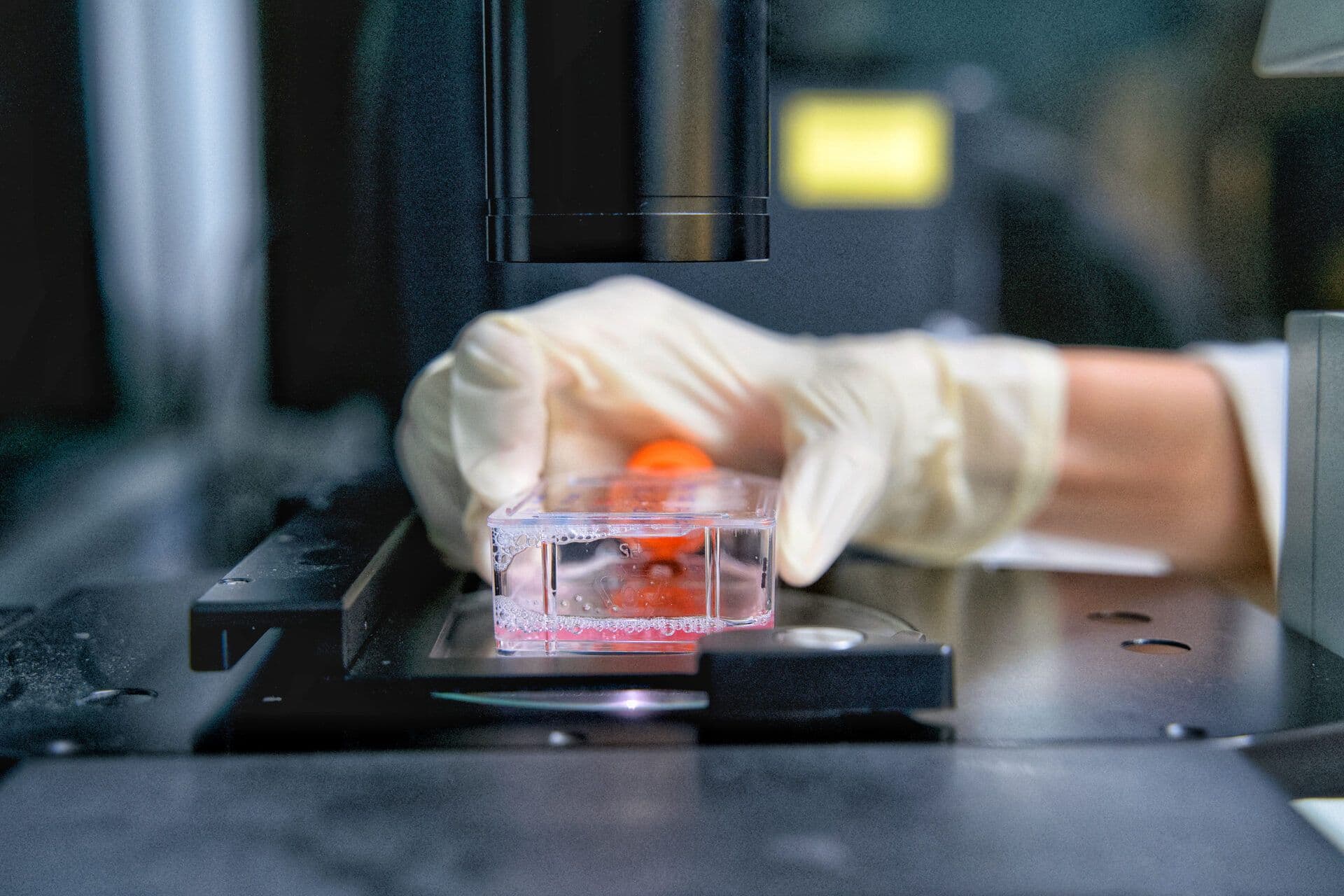
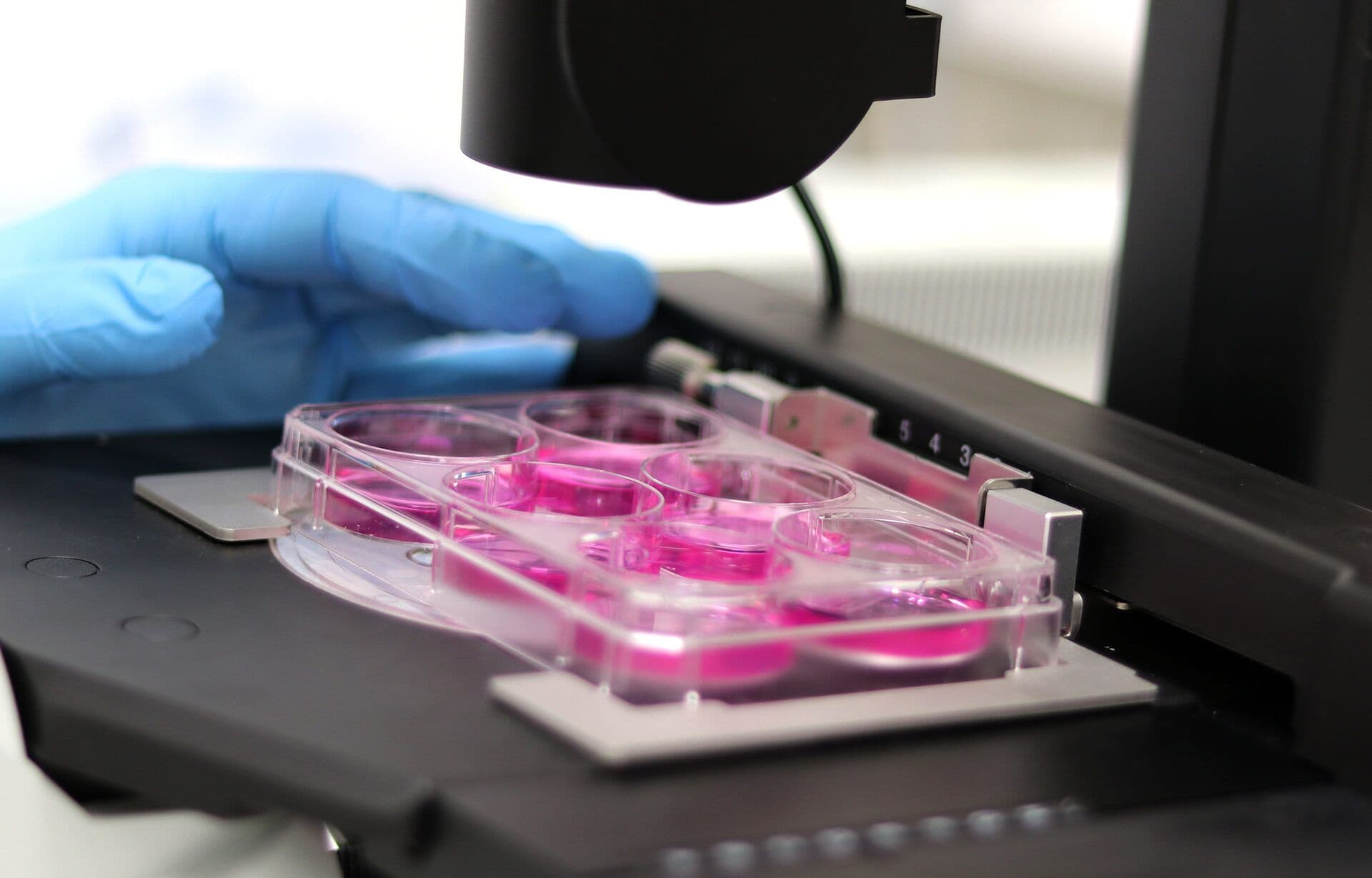
Biodimension offers a third option beyond animal studies and flat cell assays: small, living pieces of human tissue built in the lab from human cells, assembled on biomaterial scaffolds through biofabrication. Our skin models are grown air-exposed, the way real skin is, so they form a proper multi-layer barrier. Organoids self-organise from patient cells into miniature tumour or organ models. As Manokumar puts it, "What we are trying to build is closer to a clinical trial on a dish, not a replacement for the actual trial, but a human-relevant answer obtained earlier."
From skin to organoids
We started with skin because cosmetics and personal care companies had an immediate, compliance-driven need for non-animal alternatives. From there we expanded into pigmentation, dandruff, vaginal epithelial, full-thickness skin and disease models (psoriasis, with acne in development), then into permeation studies for pharma, and now into organoids, starting with breast and colorectal, with liver, kidney and cardiac models next.
Funding and what's next
In June 2026, Biodimension closed an Rs 8 crore round led by IAN Angel Fund, with participation from Campus Angels Network and other investors. The round funds five priorities: OECD Test Guideline validation, expanded cleanroom and manufacturing capacity, new products (liver, cardiac, more disease models, and a larger patient-derived organoid biobank), senior scientific and regulatory hires, and expansion into European and North American markets.
The bigger picture
Manokumar is candid that this field has "a habit of over-promising." Several non-animal methods are already validated for skin and eye irritation, sensitisation and phototoxicity, but whole-body systemic toxicity and multi-organ interactions remain a long way off. Biodimension's approach is to move method by method, with proper validation, rather than making sweeping claims. Long-term, the goal is bigger than testing: the same biofabrication techniques used to build skin for testing could one day contribute to tissue for transplantation.